
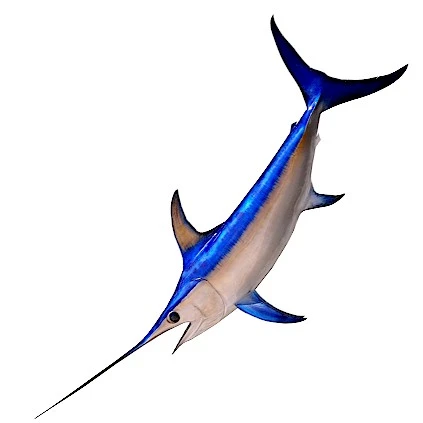
How to Swordfish: A Complete Guide to Swordfishing Setup and Technique
Swordfish are among the most challenging fish in offshore fishing. They spend much of their time in deep water, can travel great distances, and are capable of making powerful runs once hooked. Successful swordfishing is therefore as much about proper preparation and tackle setup as it is about finding the fish.
This guide covers a typical daytime and nighttime swordfishing setup, rigging, bait presentation, electronics, and fighting technique.
Click to see our Swordfish Tackle Department
Understanding Swordfishing
Swordfish can be caught throughout the water column, but traditional nighttime swordfishing often targets fish that move toward the surface to feed.
Daytime swordfishing has become increasingly popular in areas where anglers target swords in deep water during daylight hours.
The basic strategy is:
Find productive deep water → determine the target depth → present a natural bait → maintain the bait at depth → detect the bite → set and fight the fish.
Swordfishing Tackle
Swordfish require heavy-duty tackle capable of handling substantial line capacity and sustained drag pressure.
Rod

A dedicated swordfish rod should have:
- Strong butt section
- Powerful lifting capability
- Appropriate roller or conventional guides
- Length suited to your fishing style
- Line rating matched to the reel and target fish
Shorter rods are often easier to manage when fighting a large swordfish from a boat.
Click to see our Swordfish Tackle Department
Reel

A high-capacity conventional or electric-assisted reel can be used depending on the fishing method.
Important characteristics include:
- Large line capacity
- Strong drag
- High-quality gears
- Reliable bearings
- Good line retrieval rate
- Corrosion resistance
Electric reels can be particularly useful for deep-water swordfishing, where retrieving hundreds or thousands of feet of line can be physically demanding.
Main Line
Braided line is widely used because it provides:
- High strength relative to diameter
- Low stretch
- Large line capacity
- Better depth control
- Increased sensitivity
The exact line class should match your rod, reel, leader system, target fish, and applicable regulations.
Don't choose line strength independently of the rest of the tackle. The weakest component determines the practical strength of the system.
Leader System
Swordfish have sharp bills and abrasive mouths, making a strong leader essential.
A typical swordfish leader system may incorporate:
- Heavy monofilament
- Fluorocarbon
- Specialized leader material
- Swivels
- Crimps
- Sleeves
- Terminal connections
The leader should be inspected carefully before every deployment.

Look for:
- Nicks
- Abrasion
- Crushed crimps
- Damaged sleeves
- Bent hooks
- Frayed connections
Replace questionable components rather than taking chances.
Hooks
Hook selection depends on the bait, rigging method, fishing regulations, and target species.
Circle hooks are commonly used in many swordfish applications and are particularly important where regulations require them.
The hook should be appropriate for:
- Bait size
- Leader strength
- Target fish
- Fishing depth
- Rigging method
Always check current federal and state regulations before choosing hooks or rigging a swordfish bait.
Click to see our Swordfish Tackle Department
Swordfish Baits
Common swordfish baits include:
- Squid
- Mackerel
- Bonito
- Mullet
- Flying fish
- Other locally available forage
The best bait is generally one that remains durable and presents naturally at the target depth.
Freshness matters.
A bait that is falling apart may be difficult to rig securely and may not remain effective during a long soak.
Preparing the Bait
The bait should be rigged so that it remains intact while being lowered and fished at depth.
Depending on the bait, anglers may use:
- Single-hook rigs
- Double-hook arrangements where legal
- Wire or leader reinforcement
- Skirted presentations
- Specialized swordfish rigs
The objective isn't to make the bait complicated.
The objective is to create a natural-looking bait that stays securely attached to the hook and survives the descent.
Setting Up the Swordfish Spread
A major advantage of swordfishing is the ability to fish different depths simultaneously.
A basic spread might include several baits positioned at different depths.
For example:
- Shallow bait
- Mid-depth bait
- Deep bait
- Deepest bait
The exact depths should be determined by local conditions, current, water temperature, moon phase, electronics, and recent swordfish activity.
Avoid automatically assuming that one particular depth will always produce fish.
Swordfish can change feeding depth considerably.
Click to see our Swordfish Tackle Department
Using the Downrigger or Weight System
One of the most important pieces of equipment in deep swordfishing is the system used to get the bait to depth.
Depending on the technique, anglers may use:
- Heavy sinkers
- Breakaway weights
- Downriggers
- Specialized deep-drop systems
- Electric-reel deployment systems
The weight system should be matched to the depth and current.
Strong current can cause the bait to blow far behind the boat, making depth control difficult.
The Buoy and Float System
Some swordfish rigs incorporate a float or buoy system.
The float can help:
- Suspend the bait
- Indicate a bite
- Maintain separation between multiple baits
- Provide a visual reference for the spread
The design of the system depends heavily on the fishing method and local conditions.
Nighttime Swordfishing
Nighttime swordfishing is traditionally associated with deeper offshore water and surface-oriented feeding activity.
Before sunset, prepare everything.
Don't wait until darkness to start rigging.
Have ready:
- Rods
- Reels
- Leaders
- Hooks
- Baits
- Lights
- Weights
- Release clips
- Gaffs
- Harpoons where legally appropriate
- Landing equipment
Good organization becomes extremely important after dark.
Click to see our Swordfish Tackle Department
Lights and Swordfish
Swordfish are attracted to or respond to light in various fishing situations, and many nighttime anglers incorporate lights into their spread.
Depending on local regulations and fishing style, anglers may use:
- Chemical light sticks
- LED lights
- Illuminated floats
- Lighted leader components
Use only equipment that is legal in your area.
Finding Swordfish

Electronics can play a major role.
Look for:
- Deep structure
- Temperature changes
- Bait concentrations
- Current edges
- Seafloor contours
- Canyon edges
- Productive offshore water
A good chartplotter and sonar can help identify areas worth fishing.
But don't rely exclusively on a single sonar mark. Swordfish can be difficult to identify with certainty.
Current Is Critical
Current can dramatically affect your presentation.
If your bait is supposed to be at 1,500 feet but strong current is carrying the line at a steep angle, the bait may not be anywhere near the intended location.
Monitor:
- Line angle
- Depth
- Boat speed
- Current direction
- Weight position
Adjust your setup accordingly.
Click to see our Swordfish Tackle Department
Setting the Bait
Once the boat is positioned, lower the bait carefully.
Avoid dropping it too quickly.
A controlled descent reduces the chance of:
- Bait damage
- Line tangles
- Leader tangles
- Weight separation
- Crossing another line
As the bait approaches the desired depth, slow down and confirm that the rig is fishing properly.
Detecting a Swordfish Bite
Swordfish bites aren't always dramatic.
You may see:
- Slack line
- Sudden pressure
- A change in line angle
- The weight moving differently
- A slow pull
- A steady increase in tension
- The rod tip loading gradually
Pay attention to changes rather than waiting for a violent strike.
Click to see our Swordfish Tackle Department
Hooking the Fish
Hook-setting technique depends on the hook and rigging system.
With circle hooks, avoid making a traditional hard, upward hook-set.
Instead, allow the fish to load the line and apply steady pressure so the hook can rotate into position.
Once the fish is solidly connected, increase pressure progressively according to the tackle and drag setting.
Fighting a Swordfish
The fight can be long.
Don't try to win the battle in the first few minutes.
Maintain:
- Consistent pressure
- Proper rod angle
- Appropriate drag
- Good line management
When the fish runs, allow the drag to do its job.
When the fish stops, gain line.
Think:
Pressure → recover line → pressure → recover line.
Fighting a Deep Swordfish
Deep swordfish can be especially challenging because you're dealing with:
- Great depth
- Heavy line angle
- Current
- Long periods of steady pressure
- Physical fatigue
This is where good tackle and a properly balanced system pay off.
If using an electric reel, follow the manufacturer's operating recommendations and avoid using the reel beyond its intended capabilities.
Bringing the Swordfish to the Boat
The final portion of the fight requires particular attention.
As the fish approaches the boat:
- Clear unnecessary lines
- Organize the cockpit
- Communicate with the crew
- Keep the deck clear
- Prepare landing equipment
- Maintain control of the fish
Swordfish can make sudden runs or direction changes near the boat.
Don't assume the fight is over until the fish is securely landed or released.
Click to see our Swordfish Tackle Department
Swordfish Landing Equipment
Depending on the size of the fish, boat, regulations, and whether the fish is being released or retained, landing equipment may include:
- Heavy-duty gaff
- Tail rope
- Landing gloves
- Dehooking tools
- Release equipment
- Appropriate fish-handling gear
Large billfish require careful handling.
If releasing the fish, minimize time out of the water and follow current best-practice release procedures.
A Basic Swordfishing Checklist
Tackle
- ☐ Swordfish rod
- ☐ High-capacity reel
- ☐ Appropriate braided line
- ☐ Heavy leader
- ☐ Appropriate hooks
- ☐ Swivels and terminal components
Bait
- ☐ Fresh bait
- ☐ Spare bait
- ☐ Proper bait knife
- ☐ Rigging materials
- ☐ Chilled bait storage
Deep-Water System
- ☐ Weights
- ☐ Release clips
- ☐ Floats/buoys if applicable
- ☐ Downrigger or deployment system if used
- ☐ Depth references
Electronics
- ☐ GPS/chartplotter
- ☐ Sonar
- ☐ Depth sounder
- ☐ Weather information
- ☐ Current and water-temperature information
Landing
- ☐ Gaff or release equipment
- ☐ Gloves
- ☐ Dehooking equipment
- ☐ Cockpit cleared
- Click to see our Swordfish Tackle Department
Common Swordfishing Mistakes
Using Too Light a Leader
Swordfish can quickly damage undersized or abraded leaders.
Fishing Without Checking Knots and Crimps
Terminal connections should be inspected before every deployment.
Ignoring Current
Your bait may be nowhere near the intended depth if current is strong.
Dropping Baits Too Quickly
Fast deployment can damage baits and create tangles.
Using Excessive Drag
More drag isn't automatically better. Drag should remain appropriate for the complete tackle system.
Poor Cockpit Organization
When a swordfish finally appears beside the boat, there is no time to search for a gaff, clear tangled lines, or reorganize the deck.
Final Thoughts
Successful swordfishing is a combination of location, depth control, bait presentation, tackle preparation, and patience.
The most productive crews prepare before they leave the dock. Leaders are checked, baits are organized, weights are ready, reels are serviced, and everyone knows what to do when a fish comes tight.
Once the bait is deployed, pay attention to the entire system—line angle, current, depth, electronics, and subtle changes in tension.
Swordfishing can require long hours of waiting, but when a swordfish finally loads the rod, the preparation pays off. A properly balanced setup gives you the best chance of turning that first bite into a successful fight while keeping the fish and crew as safe as possible.