
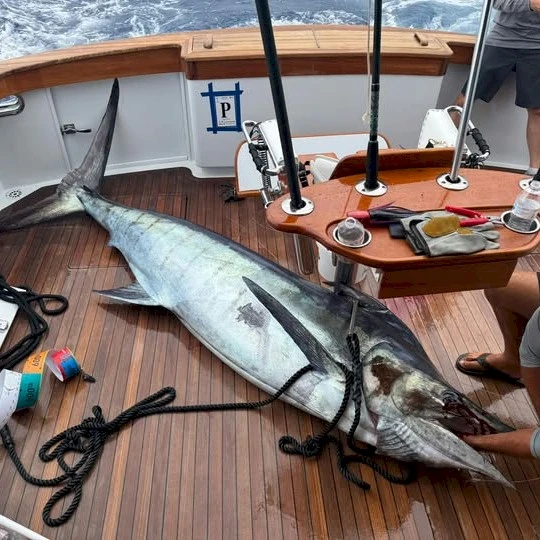
How to Rig and Use a Flying Gaff for Blue Marlin
Landing a blue marlin is one of offshore fishing's most demanding jobs. When a large fish reaches the boat, having the right landing equipment and an experienced crew can make the difference between a controlled release or a dangerous situation.
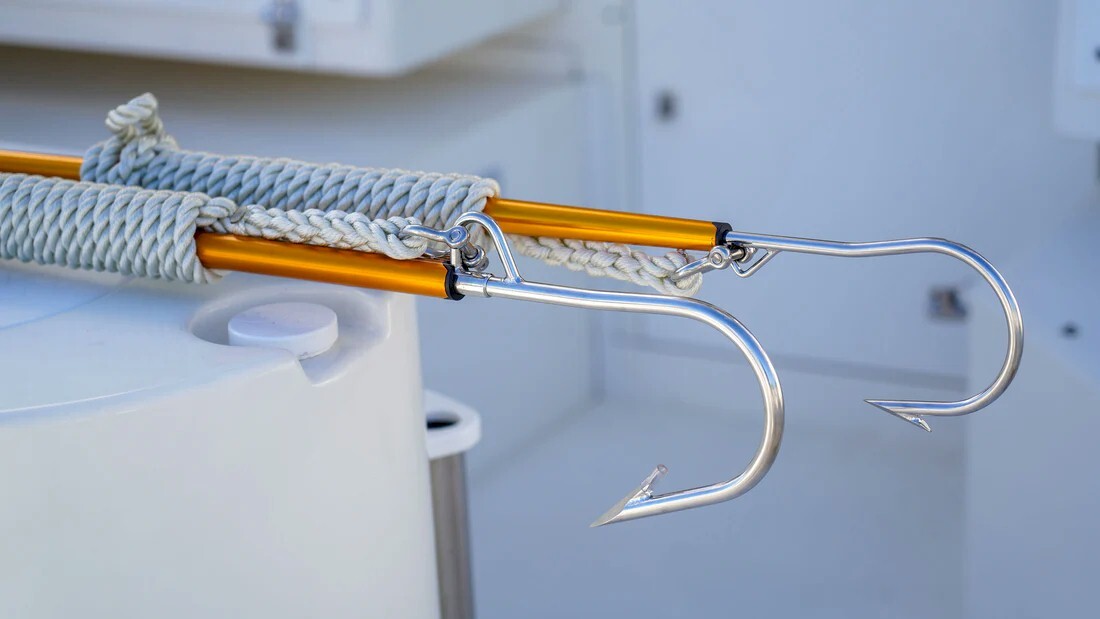
A flying gaff is designed for landing very large game fish. Unlike a conventional fixed gaff, the hook is connected to a rope or tether and can be separated from the handle after the hook is securely set. This allows the crew to maintain control of a large fish without trying to lift its entire weight with a long gaff handle.
Flying gaffs are powerful pieces of equipment and should be used only by experienced crews who understand the risks involved.
Click Here for our Flying Gaff Page
What Is a Flying Gaff?

A flying gaff consists of several basic components:
-
A heavy-duty gaff hook
-
A detachable or removable gaff head
-
A strong rope or tether
-
A suitable gaff handle or pole
-
A secure connection between the hook assembly and tether
-
Appropriate deck hardware or attachment points for handling the fish
The major advantage is that once the hook is set, the gaff head can remain attached to the fish while the handle is removed. The crew can then use the tether to control the fish alongside the boat.
For blue marlin, every component must be sized for the fish being targeted. A setup intended for smaller game fish should never be assumed to be suitable for a large marlin.
Click Here for our Flying Gaff Page
Choosing a Flying Gaff for Blue Marlin
Equipment selection should start with the expected size of the fish and the boat's layout.
Hook
The hook needs to be heavy-duty and appropriate for large billfish. It should be inspected before every trip for cracks, distortion, corrosion, or damage.

Handle
A flying gaff handle needs to provide sufficient reach to safely work around the boat's gunwale. The handle should also provide a secure grip when wet.
Rope
Use a purpose-built, high-strength line suitable for offshore fish handling. The tether should be inspected regularly for chafe, UV damage, knots, and other deterioration.

Connections
The connection between the hook, rope, and handle is critical. All attachment points should be designed for the loads expected during fish handling.
Do not improvise connections with hardware that has not been designed for the application.
Click Here for our Flying Gaff Page
How to Rig a Flying Gaff
A flying gaff should be prepared before the marlin reaches the boat. Waiting until the fish is alongside creates unnecessary pressure and increases the possibility of mistakes.
1. Inspect Everything
Before leaving the dock, inspect:
-
Gaff hook
-
Hook attachment
-
Rope or tether
-
Handle
-
Release mechanism
-
Knots and splices
-
Chafe protection
-
Deck attachment points
Replace questionable components rather than attempting to repair them at the last minute.
2. Connect the Tether
The gaff hook should be securely connected to the designated tether using an appropriate connection method.
The connection must be strong enough for the anticipated load and compatible with the hook and rope being used.
A qualified offshore crew should know the strength and limitations of every component in the system.
3. Prepare the Handle
Attach the gaff head to the handle according to the manufacturer's design.
The release mechanism should be checked several times before fishing. The crew should understand exactly how the head separates from the handle before attempting to land a fish.
4. Secure the Tether
The free end of the tether should be secured in a manner appropriate for the boat and the size of fish being targeted.
It should never be wrapped around a person's hand, arm, body, or any other part of the crew.
The tether should also be positioned so that it cannot become tangled around feet, fishing lines, controls, or other equipment.
Click Here for our Flying Gaff Page
Preparing to Land a Blue Marlin
A flying gaff should not be brought into action simply because the marlin is near the boat.
The fish should be brought under control by the angler and crew before attempting to land or handle it.
Assign specific responsibilities:
Angler: Maintains control of the rod and leader.
Wireman or leader handler: Helps control the fish's position and communicates with the angler.
Gaffman: Handles the flying gaff.
Captain: Controls boat position and keeps the working area clear.
Communication is extremely important. Everyone should know who is making the final call before the gaff is deployed.
Positioning the Boat
The captain should maintain a position that gives the gaffman a clear, safe working area.
Avoid positioning crew members where they can be struck by the marlin, leader, hook, or gaff handle.
A large blue marlin can accelerate or change direction with surprising speed even after a long fight.
Never assume that a fish is exhausted simply because it is alongside the boat.
Click Here for our Flying Gaff Page
Using the Flying Gaff
The gaffman should wait for a controlled opportunity rather than rushing the fish.
When the marlin presents an appropriate position, the gaff should be placed deliberately and with sufficient control to avoid an errant swing.
Once the hook is securely engaged, the handle can be released according to the flying gaff's design.
The crew should then maintain control of the tether while the handle is safely moved out of the working area.
Never Swing a Flying Gaff
A flying gaff should never be swung wildly at a moving fish.
A missed attempt can send a heavy hook and handle moving unpredictably around the cockpit. This presents a serious hazard to everyone aboard.
If the fish moves unexpectedly, disengage and wait for another controlled opportunity.
Click Here for our Flying Gaff Page
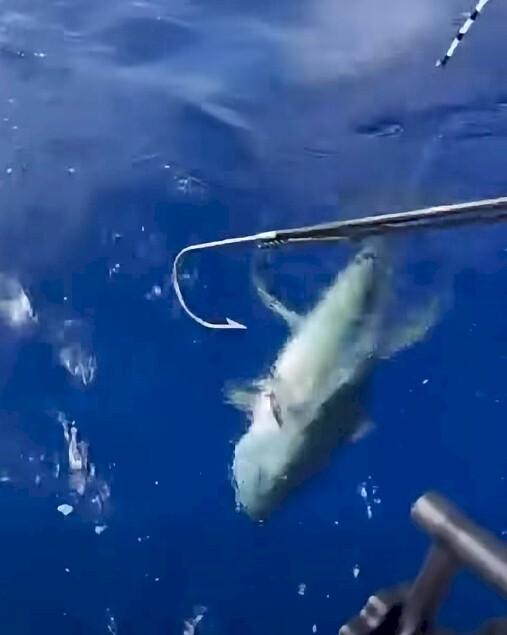
Handling the Fish After the Gaff Is Set
Once a flying gaff is engaged, the fish should be controlled using the tether and the boat's established fish-handling procedure.
Do not attempt to hold a large marlin by hand.
Do not wrap the tether around your body.
Do not place hands near the hook, leader, bill, mouth, or tail.
Crew members should remain aware of the tether's direction and avoid standing in a position where a sudden surge could pull them off balance.
For extremely large blue marlin, specialized lifting and fish-handling equipment may be more appropriate than attempting to bring the entire fish aboard.
Flying Gaffs and Billfish Release Fishing
An important consideration is whether the marlin is being retained or released.
For many blue marlin fisheries, anglers practice catch-and-release. If the fish is going to be released, a flying gaff should generally not be used.
Instead, the crew should prepare appropriate release equipment and minimize the amount of time the fish spends alongside the boat.
A release plan should be established before the fish reaches the boat.

Common Flying Gaff Mistakes
Using undersized equipment
A flying gaff should be matched to the expected fish size and application.
Poor rope management
Loose rope can become a serious trip or entanglement hazard.
Waiting until the last second
Prepare the equipment before the fish reaches the boat.
Too many people in the cockpit
Keep unnecessary crew members away from the landing area.
No communication
The gaffman, captain, angler, and leader handler should understand their respective roles.
Attempting an uncontrolled shot
Patience is often more important than speed.
Ignoring the fish's condition
A blue marlin can make an explosive movement at any point during the landing process.
Flying Gaff Safety Checklist
Before targeting blue marlin, confirm that:
-
The hook is appropriate for the fish size.
-
The hook is free from cracks or damage.
-
The tether is in good condition.
-
Connections and splices have been inspected.
-
The handle and release mechanism work correctly.
-
The tether is positioned to avoid tangles.
-
The cockpit is clear.
-
Crew responsibilities have been assigned.
-
Everyone understands the landing procedure.
-
The crew knows whether the fish is being retained or released.
-
Local billfish regulations have been checked.
- Click Here for our Flying Gaff Page
Final Thoughts
A flying gaff is specialized equipment for handling exceptionally large game fish. Used properly by an experienced crew, it provides a way to control a large blue marlin without relying on a conventional fixed gaff to support the fish's entire weight.
Preparation is the key. Inspect the equipment before the trip, establish crew responsibilities, keep the cockpit organized, communicate clearly, and never rush a landing.
Most importantly, decide before the fish reaches the boat whether the goal is to retain the fish or release it. For a blue marlin destined for release, appropriate release equipment and a carefully planned release procedure are preferable to a flying gaff.
Always follow current federal, state, and local regulations governing blue marlin and other billfish.