
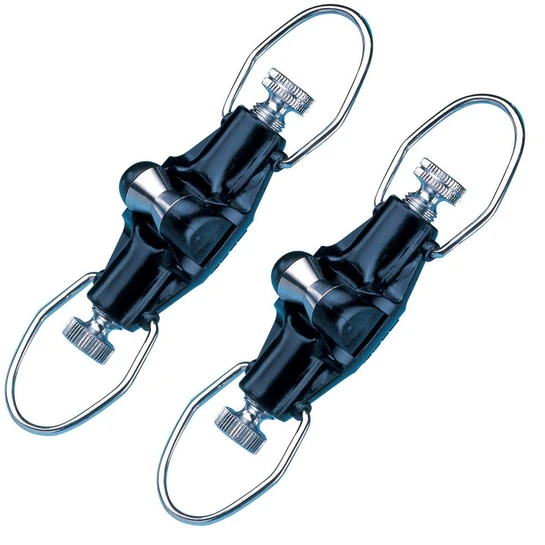
The Complete Guide to Outrigger Release Clips: Choosing the Right Clips for Offshore Trolling
Understanding how outrigger release clips work, why proper release tension matters, and how to select the best models from Alltackle.com for tuna, marlin, sailfish, wahoo, and other offshore gamefish.

Whether you're pulling rigged ballyhoo for white marlin, trolling artificial lures for blue marlin, targeting yellowfin tuna along the continental shelf, or running a spread of live baits for sailfish, properly selected and adjusted outrigger release clips are essential.
At Alltackle.com, offshore anglers can choose from a wide selection of release clips manufactured by respected names including Rupp Marine, AFTCO, Black's Marine, TACO Marine, Tigress, Du-Bro, and Malin.
This comprehensive guide explains how outrigger release clips work, compares the different designs available, and helps you choose the right equipment for your particular fishing techniques.
What Is an Outrigger Release Clip?
An outrigger release clip is a mechanical device that temporarily holds a fishing line in position while trolling. The clip attaches to the outrigger's halyard system, allowing anglers to position baits and lures farther away from the boat's wake.
When a fish strikes, the increased pressure on the fishing line causes the clip to release, transferring the load directly to the rod and reel.
Unlike a knot or permanent connection, the release clip holds the fishing line using an adjustable gripping or retaining mechanism.
The ideal release clip must accomplish three important objectives:
-
Hold the fishing line securely during normal trolling conditions.
-
Release at the appropriate pressure when a fish strikes.
-
Minimize unnecessary friction, line abrasion, and interference with the fishing line.
A clip that releases too easily can cause constant false releases, especially when trolling larger baits or operating in rough seas. Conversely, a clip that holds too tightly can interfere with the natural dropback of a bait or prevent a clean release when a fish strikes.
Finding the proper balance is one of the keys to effective offshore trolling.
Why Outrigger Release Clips Are So Important
Outriggers allow offshore fishing boats to spread multiple trolling lines across a much wider area than would otherwise be possible.
By separating fishing lines horizontally, outriggers help prevent tangles while allowing captains to create realistic bait presentations that imitate schools of fleeing baitfish.
Release clips make this possible by holding each fishing line at a predetermined location along the outrigger system.
Improved bait presentation
A properly adjusted release clip helps maintain consistent bait positioning, preventing lures and natural baits from wandering excessively or skipping uncontrollably across the surface.
This is particularly important when trolling rigged ballyhoo, swimming mullet, artificial trolling lures, and combination bait-and-lure rigs.
Better line separation
Outrigger clips help keep trolling lines separated from each other, particularly during turns, changing sea conditions, and adjustments to trolling speed.
Controlled release during strikes
When a fish attacks a bait, the release clip should disengage at the desired pressure. Depending on the fishing technique, this can provide the fish with an opportunity to turn with the bait or allow the angler to establish hook pressure.
Reduced line wear
Well-designed clips, particularly those incorporating rollers or smooth line-contact surfaces, can reduce friction and abrasion.
This becomes increasingly important when using expensive monofilament, fluorocarbon, and braided fishing lines.
Types of Outrigger Release Clips
Although all outrigger clips serve a similar purpose, their mechanical designs can vary considerably.
1. Traditional adjustable tension clips
Traditional clips use a mechanical gripping system controlled by a spring, screw, slider, or other tension-adjustment mechanism.
These clips are popular because they are simple, reliable, relatively inexpensive, and easy to maintain.
They are well suited for general offshore trolling, particularly when anglers use relatively consistent bait sizes and trolling speeds.
2. Roller-style release clips
Roller clips incorporate a rotating roller or low-friction guide that allows fishing line to move through the clip more smoothly.
These designs are particularly useful when anglers want to adjust the distance of a bait without retrieving the outrigger halyard.
Roller systems can also help reduce line abrasion when properly rigged.
3. Precision-adjustable release clips
Some advanced clips offer finer tension adjustments or multiple adjustment points.
These allow anglers to tailor release characteristics for everything from small live baits to large artificial trolling lures.
4. Specialty dropback and remote-release clips
Certain designs incorporate mechanisms that allow an angler to manually trigger a release from the cockpit.
These can be valuable when fishing for billfish with natural baits, particularly when a controlled dropback is part of the hook-setting technique.
Outrigger Release Clips Available at Alltackle.com
Alltackle carries several proven styles, ranging from economical traditional clips to sophisticated roller-guided models.
The following products are listed in Alltackle's release clip selection.
1. Black's Marine Outrigger Release Clip

The Black's Marine RC-100 is a longstanding favorite among offshore captains who appreciate straightforward operation and dependable performance.
Its traditional release mechanism makes it suitable for a broad range of natural baits and artificial trolling applications.
The Black's Marine clip is particularly attractive to anglers looking for a simple, affordable system without unnecessary complexity.
Best applications: General offshore trolling, rigged ballyhoo, tuna fishing, and conventional outrigger setups.
Why choose it: Simple construction, familiar operation, and an economical purchase price.
2. AFTCO Roller-Troller Outrigger Release Clips

AFTCO's Roller-Troller design allows fishing line to travel over a smooth roller, enabling anglers to adjust bait position by reeling in or letting out line while the line remains in the clip.
This capability is particularly valuable when captains need to make frequent adjustments to trolling spreads.
Instead of retrieving the outrigger halyard every time a bait needs repositioning, anglers can make adjustments directly from the rod and reel, within the clip's operating limits.
The roller also helps minimize friction as line travels through the system.
Best applications: Billfish trolling, tuna fishing, changing spread configurations, and situations requiring frequent bait-distance adjustments.
Why choose it: Roller-guided line movement, reduced friction, and convenient bait positioning.
3. Rupp Marine Nok-Outs Outrigger Release Clips

Rupp Nok-Outs incorporate patented roller guides and dual tension adjustments, providing additional control over bait presentation and release characteristics.
Their design is intended to accommodate a wide range of bait sizes and artificial lures while helping protect fishing line from excessive chafing.
The roller guides are especially beneficial when working with expensive trolling line and sophisticated offshore spreads.
For serious tournament crews, consistent release performance is often worth the additional investment.
Best applications: Tournament billfishing, tuna trolling, mixed bait spreads, and demanding offshore conditions.
Why choose it: Dual tension adjustments, roller guides, and versatile performance.
4. Rupp Marine Zip Clips

Rupp Zip Clips are designed for use with outriggers, downriggers, kite fishing systems, and flat lines.
Their specialized tension adjustment makes them particularly useful when anglers need precise control over lighter presentations.
For boats that frequently switch between different fishing techniques, a versatile release clip can reduce the need to carry multiple specialized designs.
Best applications: Light-tackle trolling, sailfishing, kite fishing, and multi-purpose rigging.
Why choose it: Versatility, precise tension adjustment, and compact design.
5. Rupp Marine Klickers Sportfishing Release Clips

Rupp Klickers are designed to handle different bait and lure combinations while providing convenient operation and consistent release performance.
These clips offer a useful middle ground between traditional release systems and more elaborate roller-guided designs.
Best applications: General offshore trolling, billfish spreads, and boats fishing multiple bait sizes.
Why choose it: Easy operation and flexibility across common offshore presentations.
6. AFTCO Goldfinger Outrigger Release Clip

The AFTCO Goldfinger is designed for traditional outrigger applications where anglers want a secure, adjustable line release without a roller mechanism.
AFTCO specifies that the Goldfinger should attach directly to the outrigger halyard, with the adjustment-slider end oriented toward the outrigger tip.
Following the manufacturer's mounting instructions is important for proper performance.
Best applications: Rigged ballyhoo, conventional trolling spreads, and fixed-position bait presentations.
Why choose it: Straightforward design, adjustable release, and established AFTCO construction.
7. TACO Marine Standard and Premium Outrigger Release Clips

TACO Marine offers both Standard and Premium outrigger release clips.
The Standard model combines stainless steel and plastic components and is intended for light- to medium-duty applications.
The Premium model uses stainless steel and PVC construction with a stainless steel adjustment spring for heavier-duty use.
Both versions are sold in pairs, making them convenient for outfitting port and starboard outriggers.
Best applications: Standard clips for lighter offshore trolling; Premium clips for larger baits and more demanding applications.
Why choose them: Durable materials, adjustable release systems, and convenient paired packaging.
8. Malin QDX Outrigger Release Clip

The Malin QDX incorporates a remote manual release feature that allows an angler to initiate a dropback by manipulating the halyard.
This is particularly useful when a billfish appears behind a bait and the crew wants to control the release rather than waiting for the fish to pull the line free.
Best applications: White marlin fishing, sailfishing, natural bait trolling, and controlled dropback presentations.
Why choose it: Remote manual release capability and increased control during bait presentations.
9. Du-Bro Outrigger Release Clip

The Du-Bro clip offers a rust-resistant design and an E/Z Adjust tension screw for fine-tuning release pressure.
It is a practical option for anglers looking for an economical, adjustable release system.
Best applications: Recreational offshore trolling, smaller boats, and straightforward outrigger configurations.
10. Tigress Outrigger Release Clips

Tigress offers outrigger release clips as part of its extensive line of offshore rigging accessories.
These clips are worth considering for anglers outfitting a complete Tigress outrigger system or replacing existing release hardware.
Best applications: Recreational and offshore sportfishing outrigger systems.
Outrigger Release Clip Comparison Chart
The following comparison summarizes the principal advantages of popular clips listed by Alltackle.
|
Release clip |
Main advantage |
Ideal application |
|---|---|---|
|
Black's Marine RC-100 |
Simple, economical design |
General trolling |
|
AFTCO Roller-Troller |
Smooth line movement |
Adjustable bait positioning |
|
Rupp Nok-Outs |
Roller guides, dual adjustments |
Tournament trolling |
|
Rupp Zip Clips |
Versatile, precise adjustment |
Light tackle and multi-purpose |
|
Rupp Klickers |
Wide bait compatibility |
Offshore trolling spreads |
|
AFTCO Goldfinger |
Traditional fixed-position release |
Ballyhoo and billfish |
|
TACO Standard |
Light/medium-duty construction |
Recreational trolling |
|
TACO Premium |
Heavy-duty components |
Larger baits and lures |
|
Malin QDX |
Remote manual release |
Controlled billfish dropback |
|
Du-Bro |
Fine-adjustment screw |
Budget-conscious rigging |
Product features based on Alltackle listings and manufacturer descriptions. Verify current specifications and availability before purchasing.
Choosing the Right Release Clips for Different Offshore Species
Different gamefish and fishing techniques place different demands on outrigger release clips.
White Marlin
White marlin fishing frequently involves trolling rigged ballyhoo, sometimes behind small artificial skirts.
Successful presentations require baits to swim naturally while remaining properly positioned in the trolling spread.
Release clips should hold the bait securely without creating excessive resistance when a fish takes it.
For natural bait fishing with J-hooks, crews may use a controlled dropback to allow the fish to turn with the bait before setting the hook. With circle hooks, the technique generally emphasizes controlled tension and gradual loading rather than a forceful hookset.
Recommended clip characteristics: Smooth release, adjustable tension, and optional manual dropback control.
Good choices include Rupp Zip Clips, AFTCO Goldfinger, Black's Marine, and Malin QDX.
Blue Marlin
Blue marlin trolling often involves substantially larger lures and heavier tackle.
Large artificial lures can generate considerable drag, especially when pulled at higher trolling speeds.
Release clips must be capable of holding these presentations without repeatedly disengaging.
However, excessive release tension can create unnecessary resistance and interfere with a clean strike.
Recommended clip characteristics: Strong holding capability, smooth line-contact surfaces, and reliable tension adjustment.
Rupp Nok-Outs and TACO Premium clips are particularly worth considering for these applications.
Yellowfin and Bigeye Tuna
Tuna trolling spreads frequently incorporate a mixture of natural baits, artificial lures, spreader bars, and other presentations.
Because tuna may strike aggressively, reliable line release is important.
Roller-style clips can be advantageous when adjusting bait placement or fine-tuning trolling patterns.
Recommended clip characteristics: Consistent release pressure, durability, and reduced line friction.
AFTCO Roller-Troller, Rupp Nok-Outs, and Rupp Klickers are strong options.
Sailfish
Sailfish anglers often troll smaller natural baits or use kite fishing techniques that require carefully controlled line tension.
Light-tackle applications can benefit from release clips offering precise adjustments at relatively low holding pressures.
When using circle hooks, proper release settings should complement a controlled, steady hook-up rather than an aggressive hookset.
Recommended clip characteristics: Fine tension adjustment and dependable light-pressure release.
Rupp Zip Clips and appropriate Black's Marine or AFTCO models are worth considering.
Wahoo
High-speed wahoo trolling creates unique challenges.
Heavy trolling weights, diving lures, and large artificial baits can produce significant drag.
Conventional outrigger release clips may not be appropriate for every high-speed trolling setup, especially when the equipment cannot safely maintain the required holding force.
Many high-speed wahoo spreads are better fished directly from the rod or through hardware specifically rated for the load.
When outriggers are used, select clips and rigging that can handle the intended trolling pressure and follow manufacturer guidance.
How to Properly Set Outrigger Release Clip Tension
Correct release tension is one of the most important elements of effective outrigger rigging.
Unfortunately, many anglers simply tighten their release clips until the fishing line stays in place.
That approach can produce inconsistent results.
The correct setting depends on several factors, including trolling speed, lure size, sea conditions, line diameter, and the desired hook-up technique.
Step 1: Begin with a light setting
Start with the clip adjusted toward the lighter end of its range, following the manufacturer's instructions.
Position the bait at the intended trolling distance and engage the release clip.
Step 2: Observe the bait
Watch how the bait behaves at normal trolling speed.
If the clip releases without a strike, increase the holding pressure slightly.
Step 3: Account for sea conditions
Rough seas can create sudden changes in line pressure as the boat pitches and rolls.
You may need to increase tension slightly to prevent false releases.
However, avoid compensating for poor bait presentation by excessively tightening the clip.
Step 4: Test the release
With the boat operating safely, test the clip using controlled line pressure and follow the manufacturer's recommended procedure.
The clip should release predictably without damaging the line.
Step 5: Fine-tune throughout the day
As conditions change, revisit your settings.
A clip adjusted for small ballyhoo in calm conditions may not perform the same way when trolling larger lures into a building sea.
Important: There is no single ideal release pressure for every trolling application. Use the lightest setting that reliably holds the presentation while delivering the intended release behavior.
Rigging Outrigger Release Clips Correctly
Proper installation is just as important as choosing the correct clip.
A typical outrigger system consists of the outrigger pole, halyard line, pulleys, tensioners, stops, and release clips.
The release clip attaches to the halyard or a compatible tagline assembly, depending on the configuration.
Basic installation procedure
-
Inspect the outrigger halyard and pulleys for wear, damage, or corrosion.
-
Attach the release clip according to the manufacturer's instructions.
-
Verify that the clip is oriented correctly and cannot interfere with pulleys or outrigger guides.
-
Secure any required stops, tensioners, or tagline components.
-
Check that the halyard travels smoothly through its operating range.
-
Place the fishing line in the release clip and adjust the holding pressure.
-
Test the system before beginning normal trolling operations.
Always confirm that the release clip is compatible with your specific halyard or tagline arrangement.
For example, AFTCO specifies direct halyard attachment without swivels for its Goldfinger model. Other systems may require different mounting arrangements.
Outrigger Clips and Tagline Systems
Many larger sportfishing boats use tagline systems instead of attaching release clips directly to a moving halyard.
A tagline system typically incorporates a separate line or cord extending from the outrigger to the release clip.
This arrangement can help control clip position and reduce unwanted movement in certain trolling configurations.
Taglines are especially popular on large offshore sportfishing boats where heavy trolling equipment and multiple outrigger positions are common.
When selecting clips for a tagline system, consider their compatibility with the attachment hardware, line angles, and expected trolling loads.
Alltackle also carries complementary outrigger rigging supplies, including halyard tensioners, outrigger line, pulleys, stoppers, and rigging kits.
Explore Outrigger Rigging Supplies at Alltackle.com.
Common Outrigger Release Clip Problems and Solutions
Even quality release clips can experience performance issues when improperly adjusted or maintained.
|
Problem |
Possible cause |
Recommended solution |
|---|---|---|
|
Premature release |
Tension too light or excessive lure drag |
Increase tension gradually |
|
Failure to release |
Excessive tension or binding |
Reduce tension and inspect mechanism |
|
Line abrasion |
Rough surfaces or damaged guides |
Clean, inspect, or replace clip |
|
Inconsistent release |
Salt buildup or worn components |
Rinse and service clip |
|
Bait skipping |
Poor bait position or excessive speed |
Adjust trolling distance and speed |
|
Halyard tangling |
Incorrect installation or worn rigging |
Inspect attachment and halyard routing |
|
Difficult line adjustment |
Excessive friction or unsuitable clip |
Consider a roller-guided design |
A release clip should never be relied upon to compensate for poorly rigged baits, incorrect trolling speeds, or damaged outrigger equipment.
Maintaining Outrigger Release Clips
Saltwater is extremely demanding on fishing equipment, particularly small mechanical components exposed to constant spray.
A little preventive maintenance can significantly extend the service life of release clips.
After every fishing trip, rinse the clips with fresh water to remove salt deposits and debris. Inspect the release mechanism for trapped line, scales, or other material.
Periodically check adjustment screws, springs, rollers, and retaining components for corrosion or excessive wear.
Roller-style clips should rotate smoothly without binding.
Avoid applying heavy lubricants to gripping surfaces, as they may alter release characteristics or attract dirt. Follow the manufacturer's maintenance recommendations.
Replace clips showing cracks, significant corrosion, damaged line-contact surfaces, or inconsistent release behavior.
For tournament crews, carrying spare clips is an inexpensive precaution that can prevent unnecessary downtime offshore.
Frequently Asked Questions About Outrigger Release Clips
What is the difference between an outrigger release clip and a downrigger release clip?
An outrigger release clip positions fishing line away from the boat using an elevated outrigger system. A downrigger release clip holds the line in connection with a weighted system designed to control fishing depth. Some clips can serve both purposes, but compatibility depends on their design and mounting hardware.
Are roller-style outrigger clips worth the additional cost?
For anglers who frequently adjust bait positions, roller-style clips can provide significant convenience. They can also reduce friction as line moves through the clip. Traditional clips remain effective for many fixed-position trolling applications.
How many release clips does a boat need?
The number depends on the outrigger configuration. A simple setup may use one clip per outrigger, while double- or triple-rigged outriggers require additional clips. Many sportfishing boats also carry spares.
Can release clips damage fishing line?
Yes. Damaged contact surfaces, excessive pressure, improper rigging, or binding components can cause abrasion. Regular inspection and correct adjustment help minimize these problems.
Can I use the same release clips for tuna and marlin fishing?
Often, yes. Many quality clips accommodate multiple species and bait types. However, release tension and rigging should be adjusted for the particular presentation.
Should I use a release clip with braided fishing line?
Only if the clip manufacturer supports that application. Thin braid may slip, dig into gripping surfaces, or behave differently from monofilament. Some crews use a suitable monofilament section or other approved connection arrangement when fishing braid.
How often should release clips be replaced?
There is no universal replacement interval. Inspect them regularly and replace any clip with worn, corroded, damaged, or unreliable components.
Shop Outrigger Release Clips at Alltackle.com
Choosing the right outrigger release clips is an important part of building a dependable offshore trolling system. Whether you need traditional adjustable clips for recreational fishing or advanced roller-guided systems for competitive tournament fishing, Alltackle.com offers a variety of options.
AFTCO Release Clips
Roller-Troller and Goldfinger models for different bait-positioning requirements.
Shop AFTCO ClipsRupp Marine Release Clips
Nok-Outs, Zip Clips, and Klickers for precision offshore trolling.
Shop Rupp ClipsBlack's Marine Release Clips
Proven traditional clips for outrigger, flatline, and other fishing applications.
Shop Black's ClipsFor the full selection, visit Alltackle.com's Outrigger Release Clips Department.
Final Thoughts: Small Components, Big Results
Outrigger release clips may be among the least expensive components in a sophisticated offshore trolling spread, but their performance can have a meaningful impact on your fishing success.
A properly selected and adjusted clip helps keep baits swimming naturally, maintains proper line separation, reduces unnecessary line wear, and releases the fishing line at the appropriate moment.
For anglers who prefer simple, proven equipment, traditional clips from Black's Marine and AFTCO remain excellent options. Those seeking additional control and reduced friction may appreciate the advanced features of Rupp Nok-Outs and AFTCO Roller-Troller clips. Specialized models such as the Malin QDX offer additional capabilities for particular billfish techniques.
Ultimately, the best release clip is the one that matches your trolling equipment, bait presentation, fishing conditions, and preferred hook-up technique.
Before your next offshore trip, inspect your release clips, check their tension settings, and make sure your outriggers are rigged for dependable performance. When the next marlin, tuna, or sailfish crashes your bait, you want every component of your trolling spread working exactly as intended.